Cart
0
Add $150.00 more for free shipping!


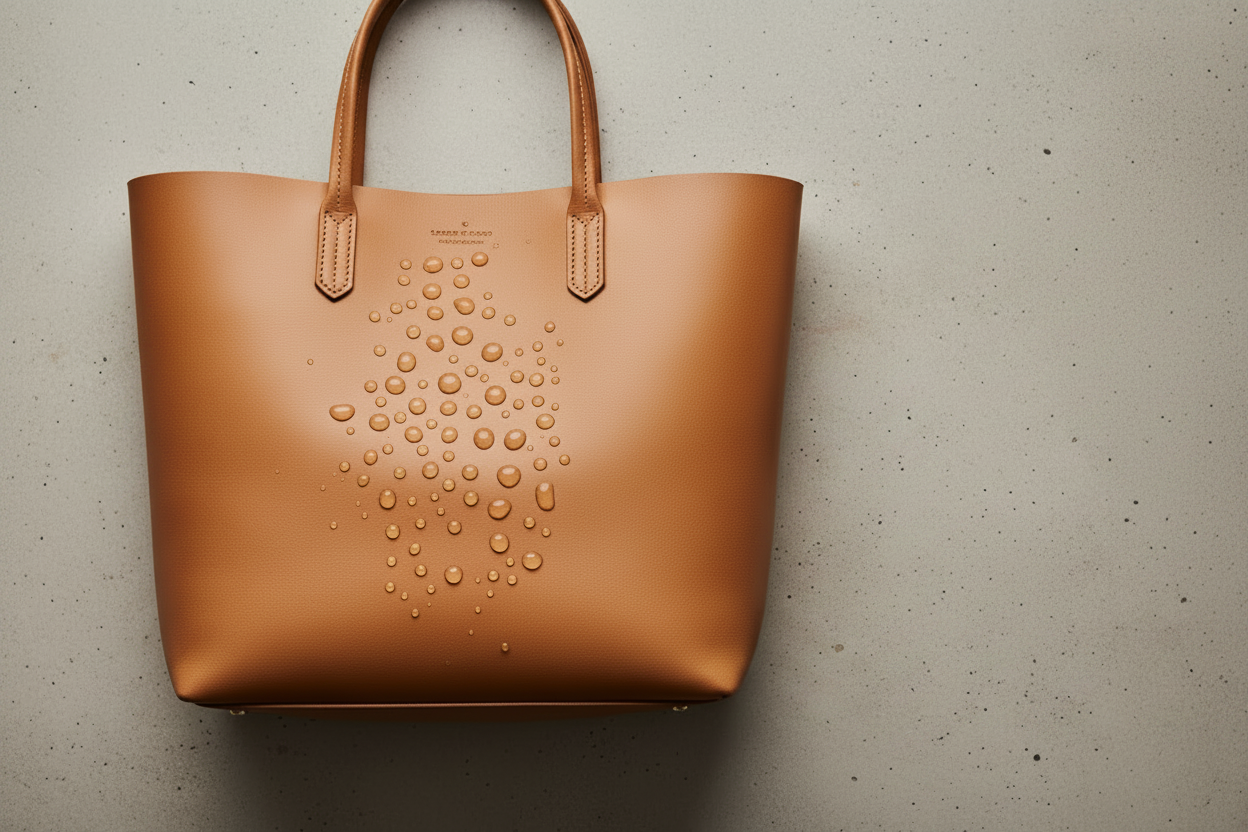
You're standing at the door, it's started raining out of nowhere, and you're staring at your leather bag wondering if you should just leave it home. Relatable. This is basically the moment everyone starts googling "leather bag rain protection" or "best waterproofing spray for leather bags" at 8am on a Tuesday. So let's actually answer it properly, because there's a lot of confusing advice out there, and some of it is flat-out wrong.
Short answer: no, you can't make leather truly waterproof. But you can absolutely make it water-resistant enough that a light rain or an accidental spill doesn't ruin your day. There's a real difference between those two words, and understanding it will save you from either babying your bag unnecessarily or ruining it with the wrong product.
Leather is a natural material. It's got pores, it breathes, and that's honestly part of why it feels and ages the way it does. Something that's genuinely waterproof would need to seal those pores completely, which usually means coating it in a plastic-like layer, the kind of thing you'd see on a rain jacket, not a leather tote.
Nobody actually wants that on a nice bag. It changes the texture, kills the natural look, and can trap moisture inside instead of letting it evaporate normally, which causes its own problems over time.
Water-resistant is the realistic, and honestly better, goal. That means treated leather can handle light rain, splashes, or a drink getting knocked over without soaking through immediately, giving you time to wipe it off before it becomes a real problem.
Yes, but it depends heavily on which one you're using and how you use it. A lot of people spray whatever's under the sink or whatever they used on their sneakers, and that's usually where things go wrong. Silicone-based sprays made for canvas or synthetic materials can leave a shiny, plasticky finish on leather, or worse, discolor it permanently.
What you actually want is a leather-specific protector spray, not a generic waterproofing spray. These are formulated to sit on top of the leather without clogging its pores, so it can still breathe while repelling light moisture. Look for ones specifically labeled for leather, not "all-purpose" or "outdoor fabric" sprays.
How to apply it correctly:
Genuine leather, no matter how nice it is, was never designed to be fully waterproof. That's true whether it's a $50 bag or a $2,000 one. What separates a bag that handles moisture well from one that doesn't usually comes down to two things: the quality of the leather itself, and how well it's been conditioned.
Well-conditioned leather naturally resists light moisture better than dry, neglected leather does, simply because it hasn't lost the natural oils that help it shed water instead of absorbing it immediately. This is actually one of the reasons conditioning matters so much beyond just keeping leather soft, it's doing double duty as a first line of defense against everyday moisture.
This is part of why we build Onna Ehrlich bags from cowhide leather in the first place. It's a naturally dense, durable leather that holds up to daily life better than thinner or heavily processed alternatives, and it's the same reason our pieces are meant to be used, carried, and lived in for years, not kept in a closet out of fear of a little rain.
Depends on your life, honestly. If you're commuting through unpredictable weather, live somewhere rainy, or you're someone who's genuinely hard on their bags, a leather protector spray is a smart, low-effort habit to pick up. It takes ten minutes and can prevent a lot of stress later.
If you're mostly indoors, careful with your bag, or live somewhere dry, you might genuinely never need it. In that case, a good conditioning routine every few months does most of the heavy lifting already, since conditioned leather handles the occasional splash just fine on its own.
Even a protected bag can get properly soaked if the weather's bad enough, so here's what to actually do if it happens:
Blot, don't rub. Use a dry, absorbent cloth to soak up as much surface water as you can immediately.
Stuff it with tissue or a soft cloth to help it hold its shape and absorb moisture from the inside as it dries.
Let it air dry naturally, away from direct heat or sunlight. A radiator or hairdryer might feel like it's helping, but rapid drying is one of the fastest ways to cause cracking.
Condition it once it's fully dry, not before. Rain pulls oils out of leather, and conditioning afterward replaces what was lost.
You can't make a leather bag truly waterproof, and honestly, you wouldn't want to, that's what turns beautiful leather into something that looks and feels like plastic. What you can do is make it genuinely water-resistant with the right spray, keep it well-conditioned so it's naturally more resilient, and know how to handle it properly if it does get caught in the rain. That combination is really all a leather bag needs to hold up for years of actual, everyday use, rain included.