Cart
0
Add $150.00 more for free shipping!


Registries and table-setting wish lists almost always come down to this same fork in the road (pun intended): do you go with stainless steel, or splurge on silver-plated? They look similar in photos, they're priced worlds apart, and the sales copy for both tends to promise the same thing, elegance, durability, a table that photographs well. Only one of those claims is actually true for both.
Stainless steel is the better choice for everyday use, it resists tarnish, handles the dishwasher, and doesn't require polishing. Silver-plated flatware is more formal and traditional in appearance, but it tarnishes over time, needs hand care, and the plating itself can wear through with heavy use. For daily dining, stainless steel wins on practicality. For occasional, formal entertaining where the look matters more than the maintenance, silver-plated still has a place.
Also Read: How to Choose the Best Flatware Set for Everyday Use
Stainless steel flatware is solid metal all the way through, an alloy of steel, chromium, and usually nickel, which is what gives it that rust- and corrosion-resistant quality. What you see is what you get, structurally, from the surface to the core.
Silver-plated flatware is different by design. It starts as a base metal, typically nickel silver or brass, and gets coated with a thin layer of actual silver through an electroplating process. That top layer is genuinely silver, which is where the shine and the price tag come from, but underneath it, it's a completely different, less precious metal doing the structural work.
This distinction is the root of almost every practical difference between the two, how they age, how they're cared for, and what happens to them after years of use.
| Stainless Steel | Silver-Plated | |
|---|---|---|
| Composition | Solid alloy (steel, chromium, nickel) | Base metal coated with a thin silver layer |
| Tarnish resistance | Naturally tarnish-resistant | Tarnishes with air exposure, needs regular polishing |
| Dishwasher safe | Yes | Not recommended, plating can wear or discolor |
| Durability | Holds up to daily use for years | Plating thins with heavy use, can eventually wear through |
| Appearance | Clean, modern, consistent finish | Warmer shine, traditional, formal look |
| Maintenance | Wash and go | Hand wash, regular polishing, careful storage |
| Typical cost | Lower, budget-friendly to mid-range | Higher, especially for well-known makers |
| Best for | Daily meals, casual and semi-formal entertaining | Formal occasions, heirloom-style collections |
Also Read: How to Choose the Best Silverware Set for Everyday Luxury Living
This is where the two genuinely part ways. Stainless steel is built to be used constantly. It doesn't corrode, doesn't react with acidic foods the way older metals could, and a good-quality set will look essentially the same after years of regular meals, dishwasher cycles included.
Silver-plated flatware is more delicate than it looks. The silver layer, even on a well-made piece, is thin, and every wash, every scrub, every stack in a drawer gradually wears it down. Decades of heavy daily use can eventually expose the base metal underneath, at which point the piece can't really be restored to its original look. This is exactly why silver-plated sets tend to get reserved for special occasions rather than a Tuesday dinner, less about tradition, more about self-preservation.
Also Read: Best Dinnerware Sets for Everyday Use
Stainless steel asks almost nothing of you. Dishwasher safe, resistant to spotting if you dry it promptly, no polishing required. It's genuinely low-maintenance flatware, which is a big part of why it's the default choice for most households.
Silver-plated pieces need real upkeep. They should be hand washed rather than run through a dishwasher, since the heat and harsh detergents can accelerate wear on the plating. They tarnish naturally from air exposure, even sitting unused in a drawer, so periodic polishing with a silver-safe polish is part of owning them. Storage matters too, anti-tarnish cloth or a lined case slows the process considerably compared to loose storage in a regular drawer.
Stainless steel wins here on every front. It's less expensive upfront, and because it doesn't wear down the way plating does, you're not budgeting for eventual replacement the way you might with a heavily used silver-plated set.
Silver-plated flatware costs more initially and carries an ongoing cost in time, polish, and careful handling. For some people, that's part of the appeal, it feels like a deliberate, cared-for object rather than a disposable one. For a busy household eating three meals a day, it's a genuine time investment most people don't end up sustaining long term.
It depends entirely on how you plan to use it. As an everyday set, most people find it more maintenance than it's worth, tarnish builds up faster than expected, and dishwasher use isn't really an option. As a formal, occasional-use set, reserved for holidays or entertaining, it can absolutely be worth it. The warmer shine and traditional look do something a modern stainless finish doesn't quite replicate, and if it's only coming out a handful of times a year, the wear concerns become far less relevant.
Neither poses a real health concern for typical use. Stainless steel is inert and doesn't react with food, which is part of why it's the standard choice in professional kitchens and healthcare settings. Silver-plated flatware is generally safe as well, since the plating layer is stable under normal use, though if the plating wears through significantly and exposes the base metal underneath (often nickel silver, which despite the name contains no actual silver), some people with metal sensitivities may notice a reaction. For most households, this isn't a meaningful concern either way, but it's worth knowing if you have a known nickel sensitivity.
If you're shopping for an everyday set, prioritize stainless steel with a higher chromium and nickel content (often labeled 18/10), which offers better shine retention and corrosion resistance than lower grades. If you're buying for formal or occasional use and want the traditional silver look, check the plating thickness if it's listed, thicker plating generally holds up longer before wear becomes visible. Either way, hand-feel matters more than photos, a good set should feel balanced and substantial in hand, not top-heavy or flimsy at the handle.
Also Read: How to Set a Table for a Dinner Party (Step-by-Step)
The reason most professional kitchens, hospitality settings, and design-forward everyday tableware lines default to stainless steel isn't aesthetic preference, it's practicality at scale. A material that holds up to constant washing without degrading is simply a better fit for how most people actually eat, several times a day, every day, for years. Silver-plated flatware earned its formal reputation precisely because it was never meant for that kind of use, it was built for occasions where appearance mattered more than frequency.
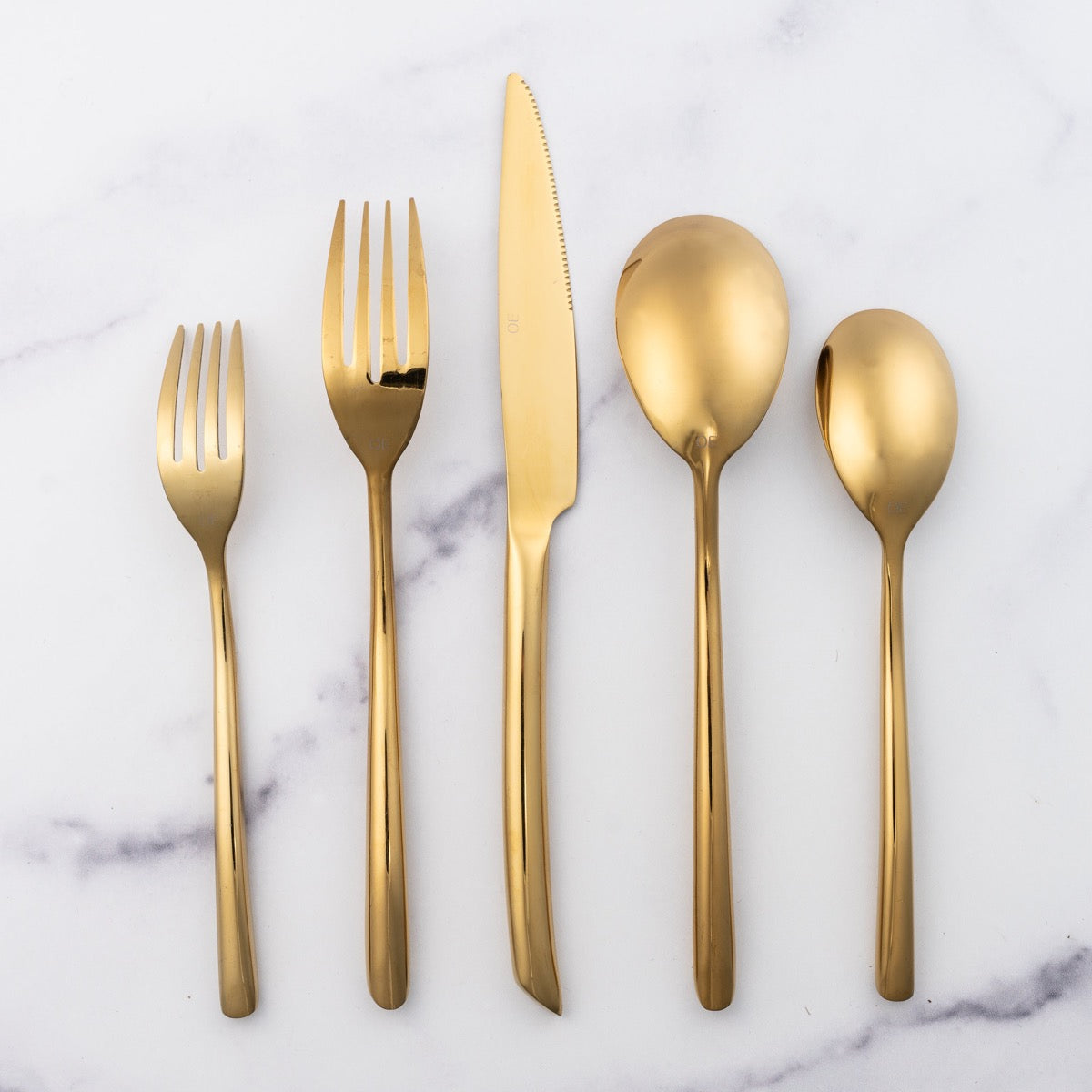
This is part of why our own flatware collection is built in stainless steel rather than plated finishes, sets like our 20-piece collections in gold, black, and nickel finishes are designed to bring a formal, elevated look to the table without asking you to hand wash and polish after every meal. You get the visual impact people associate with a "special" table setting, in a material built for how people actually use flatware day to day.